The Gastroenterologist Who Discovered Why Nearly 3 In 4 GLP-1 Patients Get Constipated — And Every Doctor Was Treating The Wrong Organ
If you’ve lost the weight on your Ozempic®, Wegovy®, Mounjaro®, or Zepbound® but you haven’t had a normal bowel movement in 7, 9, or 11 days — despite the Miralax, the fiber, the prune juice, and two liters of water a day — please read this before you lower your dose or quit the one thing that finally worked.

After 19 years as a gastroenterologist, I watched Diane sit across from me and say the thing I now hear almost every single week.
“I finally lost the weight. And I would give every pound back just to be able to go to the bathroom.”
She was on a GLP-1. Down 40 pounds. The medication had done in seven months what a decade of dieting never could. But she hadn’t had a normal bowel movement in nine days.
And she’d tried everything. Miralax every morning. Fiber gummies. Prune juice. Two liters of water a day. Her doctor told her to “add more fiber and give it time.”
Nothing moved.
My name is Dr. Karen Mercer. I’m a board-certified gastroenterologist, and I’ve treated thousands of patients on GLP-1 medications like Ozempic®, Wegovy®, and Mounjaro®. Here is what almost every one of them has in common. And what almost every doctor misses.
The Question Nobody Was Asking

Every doctor Diane saw treated the same organ. Her colon.
More fiber. More water. More laxatives. All of it aimed at the very bottom of the digestive tract. The exit.
But Diane’s problem didn’t start at the exit. It started three feet higher up. In her stomach.
And nobody was looking there.
It Was Never A Colon Problem
Let me be clear about something first, because this matters.
The GLP-1 didn’t fail Diane. It did exactly what it’s designed to do.
These medications work by slowing your stomach down. That’s the whole point. Food stays in your stomach longer, so you feel full faster and you eat less. That “I’m just not hungry anymore” feeling? That’s your stomach emptying in slow motion. For weight, it’s close to a miracle. I have watched it change lives that nothing else could touch.
But there’s a catch nobody explains at the pharmacy counter.
In a lot of people, the shot slows the stomach down so much that it nearly stops. There’s a medical name for it — delayed gastric emptying. The food you eat doesn’t move along. It just sits.
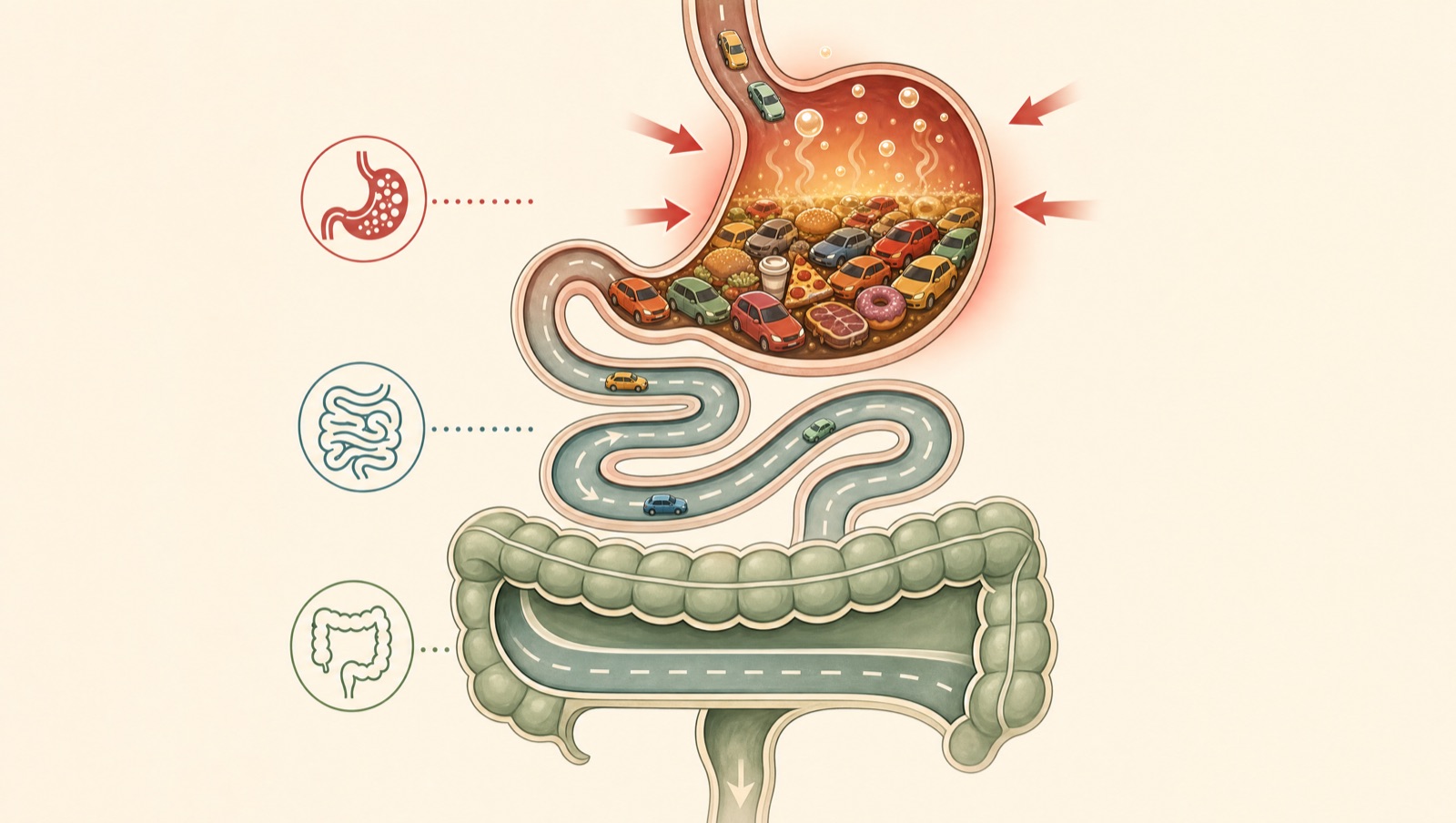
Picture your digestive system as a highway. The on-ramp is your stomach. The middle stretch is your small intestine. The off-ramp is your colon, where waste finally exits.
Everyone assumes “constipation” means the off-ramp is blocked. That’s where things come out, so that’s where the problem must be. But your GLP-1 isn’t slowing your colon. It’s slowing your stomach. The on-ramp.
And when food sits in a stalled stomach, everything downstream grinds to a halt behind it. By the time anything reaches your colon, it’s been backed up for days. Hard. Dry. Compacted. Stuck.
That’s your constipation. It was never a colon problem. It was a stomach problem the entire time. The colon is just where you finally notice it.
Why The Fiber And Laxatives Only Make It Worse
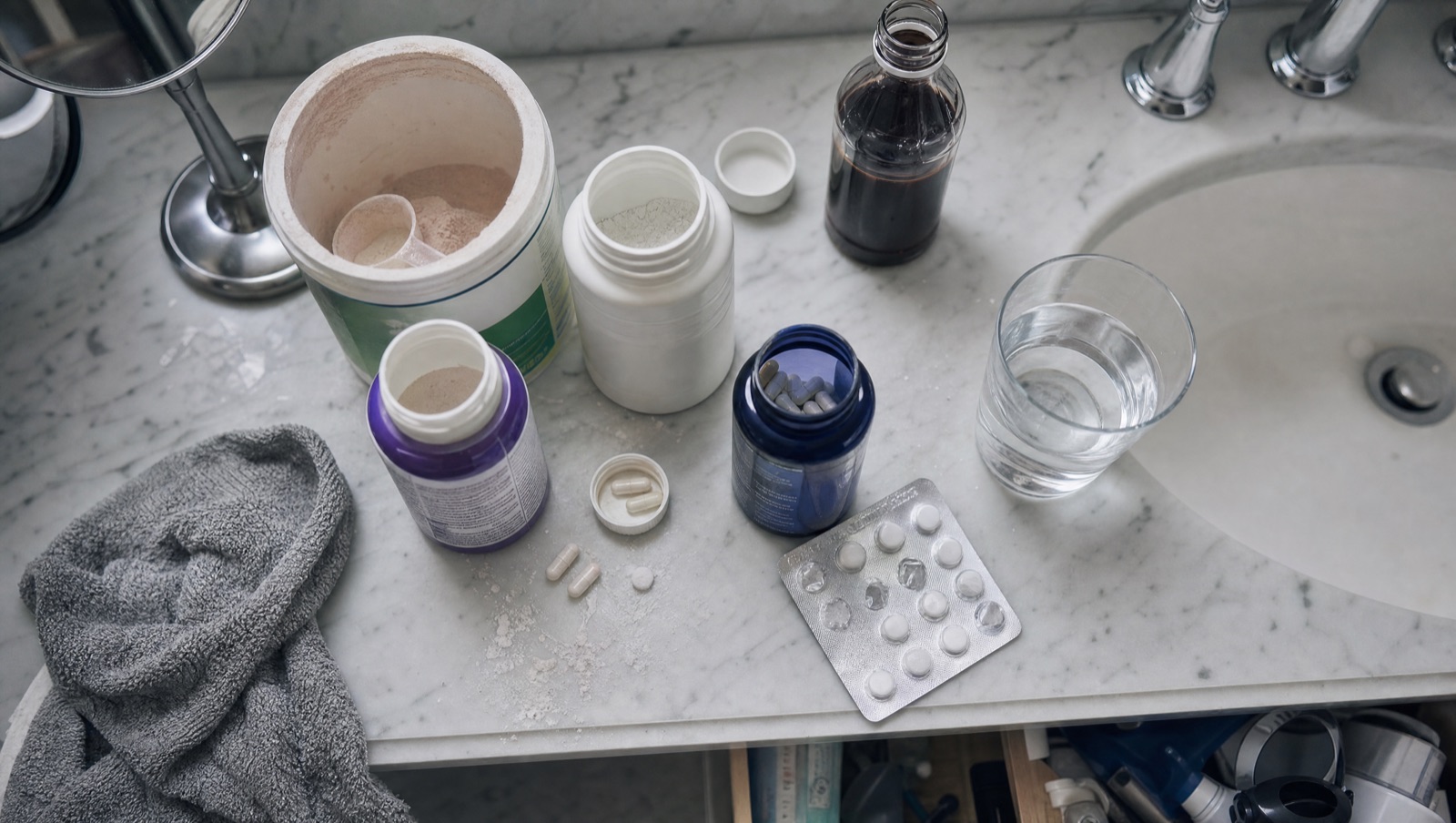
This is the part that made me rethink everything I’d been telling patients for years. Every product on that prescription pad operates six feet downstream of where the problem actually is.
- Laxatives work on the colon. They pull water into the bottom of your tract to force out whatever is already sitting there. But if the traffic jam is up in your stomach, you’re flushing an empty stretch of highway. You get a little relief, then you’re right back where you started. That’s why it never lasts.
- Fiber is worse. Fiber only helps if your stomach is actually moving it along. Pour more fiber into a stomach that’s barely contracting and all you’ve done is add bulk to a stalled engine. That’s the bloating. That’s the “six months pregnant by lunchtime” feeling. I have watched women double their fiber and end up more backed up than when they started.
- More water? Water can’t push what the muscles won’t move.
- Probiotics? They support your colon’s microbiome. That’s not what a slowed stomach lost, and most are killed by stomach acid before they get anywhere near the colon anyway.
Every one of these treats the wrong organ. They all aim at the colon. Not a single one of them wakes the stomach back up.
What I Found In My Own Patients
Over eighteen months, I started tracking it in my own practice. Of the GLP-1 patients who came to me constipated — and that was nearly 3 out of every 4 — the pattern was almost identical. Sluggish, stalled stomach emptying.
And every single one of them had been told the exact same thing. More fiber. More water. More laxatives. Not one had been told the problem was in their stomach.
So I went looking for something that did the one thing all of that missed. Something that could gently get the stomach contracting again. A prokinetic — that’s the medical word for something that restores the natural muscle movement of the gut, instead of just flushing the tail end of it.
There’s a prescription version. It carries its own side effects, and honestly, most of my patients don’t need to go there. What most of them needed was something simpler. And I found it in an unlikely place.
Celery.

Not the celery juice trend. A specific compound concentrated in celery, called apigenin. The research on it is genuinely fascinating — it helps the smooth muscle of the stomach begin contracting in its natural rhythm again. It doesn’t flush you out like a laxative does. It wakes up the engine that stalled in the first place.
But there was a problem. You can’t eat enough celery in a day to get anywhere near a meaningful dose. And almost every “digestive” product on the shelf is the same two things — fiber, or probiotics. The exact tools that do nothing for a stomach that won’t move. I spent weeks looking for something I could actually put in a patient’s hand.
The Formula That Actually Targets The Stomach
That’s when I found Motilli.
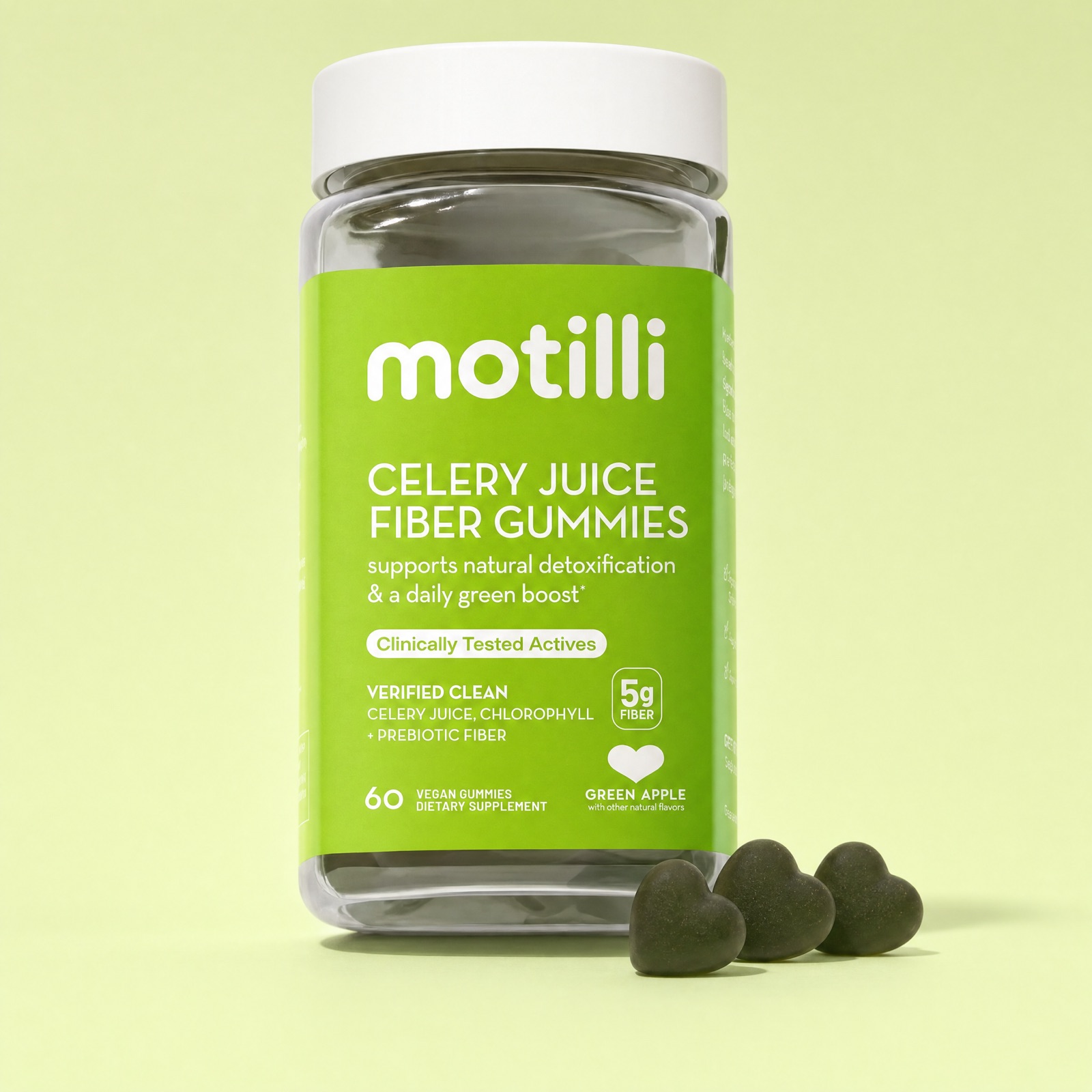
Concentrated apigenin from celery — at a real dose, the amount the research points to, not a sprinkle of celery powder. Paired with a gentle, low-bulk soluble fiber to support the colon, and chlorophyll, which quietly takes care of the other GLP-1 misery nobody warns you about: the sulfur, rotten-egg burps that come from food fermenting in a stomach that won’t empty.
- Apigenin — wakes the stomach up and restores its natural contraction rhythm
- Chlorophyll — neutralizes the sulfur gas behind the rotten-egg burps at the source
- Low-bulk soluble fiber — supports the colon without adding the bulk a stalled stomach can’t move
One ingredient wakes up the stomach. One supports the colon. One clears the smell. Everything the actual problem needs. Nothing it doesn’t. It comes as two gummies a day — easier on a nauseated GLP-1 stomach than capsules, which is exactly the population that needs it most.
I started recommending it to the patients who were truly stuck. The ones who’d already tried every laxative on the shelf and were ready to quit their medication over it. Diane was one of the first.
- Week 2: The bloating eased. For the first time in months, she made it through an afternoon at her desk without discreetly unbuttoning her jeans.
- Week 3: She went to the bathroom normally. She texted me to tell me. Actually texted me.
- Week 6: Regular. Every day. No Miralax. No prune juice. No planning her whole morning around whether her stomach was going to cooperate.
Women On The Shot Are Getting Their Lives Back

I’ve now recommended Motilli to hundreds of patients on GLP-1s. The pattern is always the same. They were doing everything right — fiber, water, laxatives — all of it aimed at the wrong organ, all of it downstream of the real problem.
“Nine days between bowel movements, down to normal, every day. I stopped dreading food.”
“The fiber gummies my doctor recommended made me balloon. This actually got things moving. And the burps are finally gone.”
“I almost quit my medication because of the constipation. Turns out I didn’t have to. This fixed the part the shot broke.”
How Motilli Compares To What Your Doctor Recommended
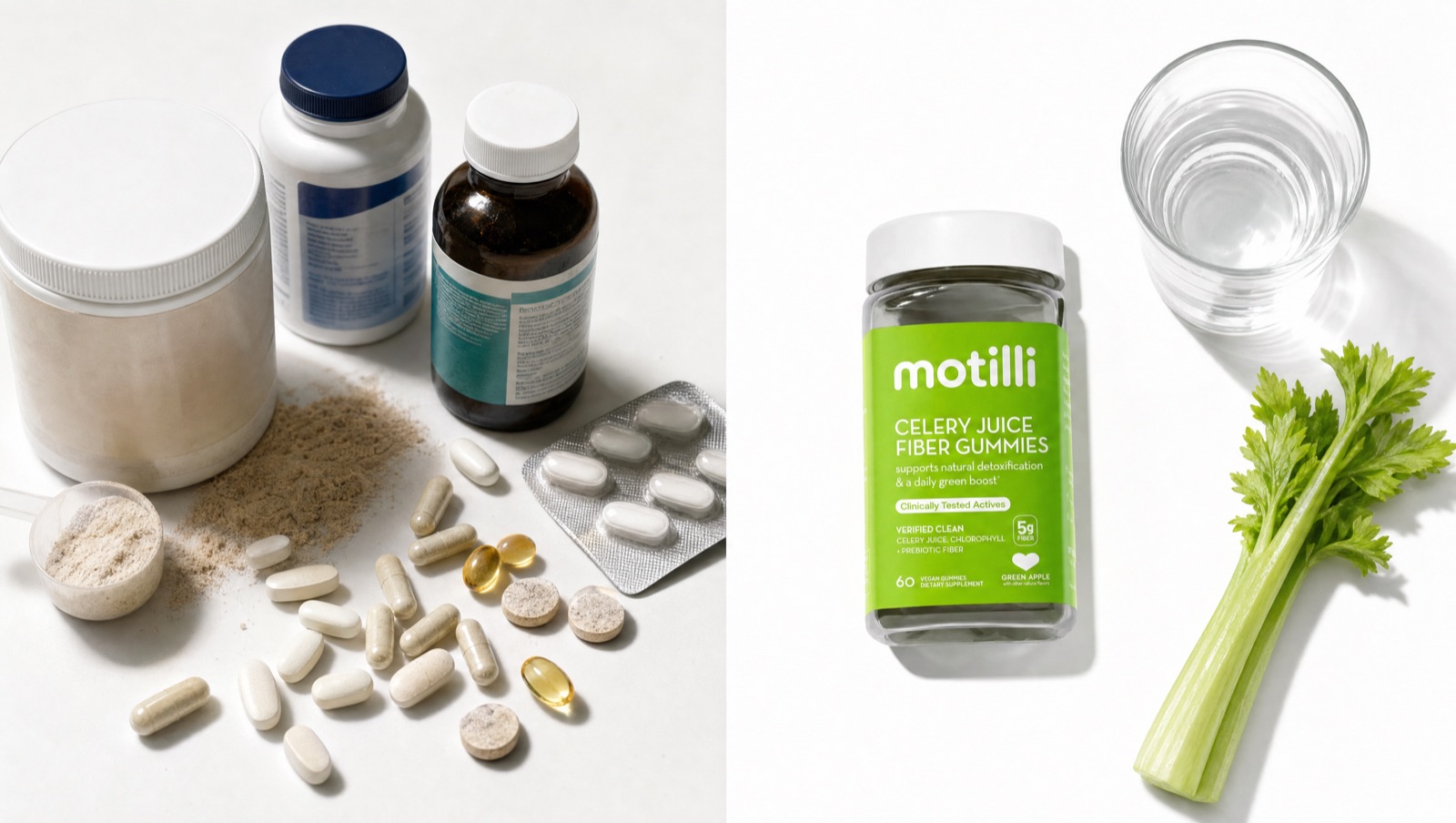
| Motilli | Miralax / Fiber / Magnesium | Probiotics | |
|---|---|---|---|
| Targets the stalled stomach (the on-ramp) | ✓ | — | — |
| Restores natural motility instead of flushing | ✓ | — | — |
| Neutralizes rotten-egg burps at the source | ✓ | — | — |
| Built specifically for GLP-1 stomachs | ✓ | — | — |
| No cramping, urgency, or dependency | ✓ | Dependency risk | ✓ |
| No prescription required | ✓ | ✓ | ✓ |
Try Motilli Risk-Free For 90 Days

So ask yourself this. If you’re on a GLP-1 and you’re still backed up no matter how much fiber and water you force down:
- Is it really your colon — or has your stomach quietly stalled, and no one ever thought to check?
- Are you being told to “drink more water and give it time” for the third, fourth, fifth appointment in a row?
- Have you started to wonder whether you’ll have to choose between the weight loss you fought for and a gut that works?
Because that is not something more Miralax is going to fix. It aims at the wrong organ.
Guarantee
Shipping $45+
Checkout
Returns
Don’t wait until you’re nine days out and dreading every meal. Don’t wait until the constipation makes you want to give up the one thing that finally worked for your weight.
Wake the stomach back up.
Board-Certified Gastroenterologist